CONCLUSIONS
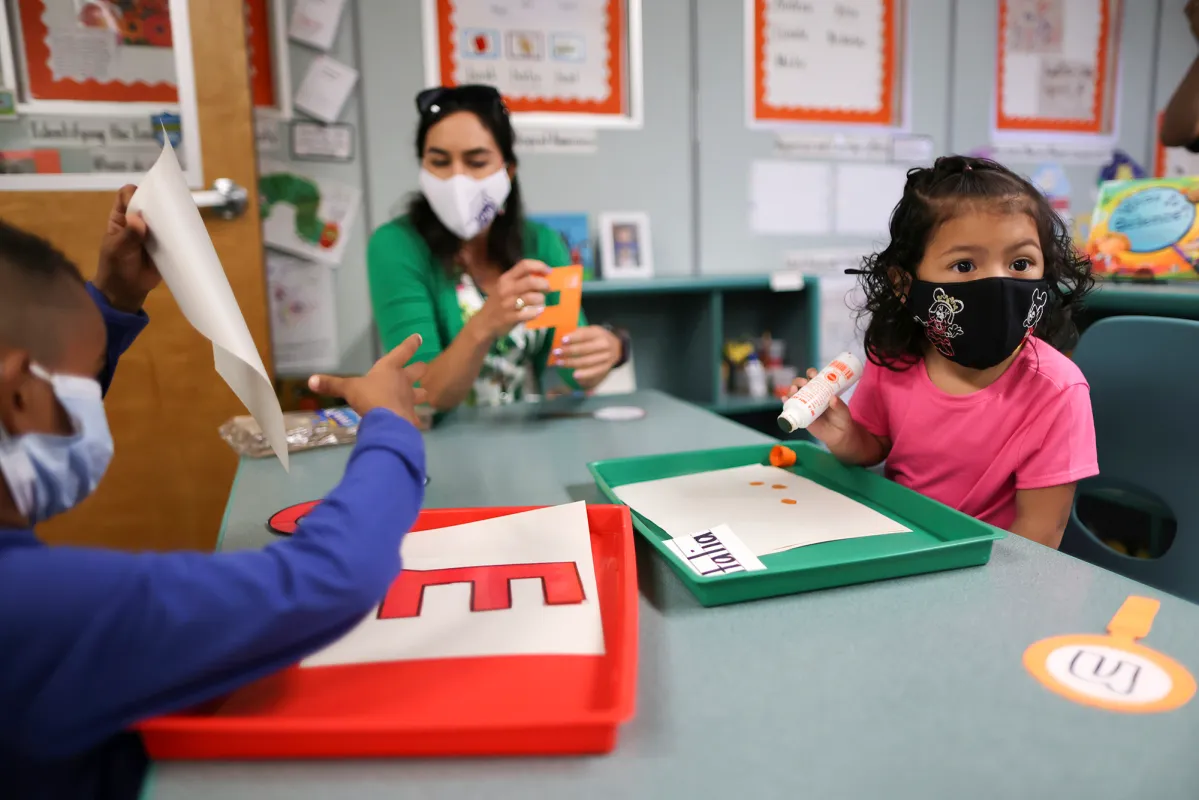
Photo Credit: Lucy Nicholson | Reuters
In our project, we set out to understand how the COVID-19 pandemic affected student success, which includes academics and well-being, across different student populations while focusing specifically on California and Ohio. Using our literature review and data analysis, let’s circle back to our research questions.
What are the implications of focusing primarily on standardized test scores to measure educational success, especially in a post-pandemic context?
One thing was clear in our research was how much weight standardized test scores carry in evaluating student success. Despite this, it also leaves out other important factors of the full story. Our data visualizations show declines in both math and reading scores across many states, especially from 2019 to 2022 during the pandemic because schools shifted to remote learning. However, other factors like mental health, access to technology, or home learning environments significantly contributed to student success outcomes that test scores do not fully capture. For example in our literature review, the pandemic exacerbated socioeconomic factors that contributed to some students’ low test scores (Bailey et al. 2021) and many sources ignored other measures of success like social development, graduation rates, or overall student well-being. This shows how limiting solely relying on test scores can be when trying to understand what educational success looks like.
What historical educational inequalities are mirrored in the pandemic’s impact on academic performance across different states, according to SEDA2023?
Our findings also highlighted how the pandemic didn’t just cause new challenges, but also worsened existing ones. In California, Black and Hispanic students consistently scored below average, with Black students averaging about -1.1 below the mean in 2023. Economically disadvantaged students also consistently underperformed compared to their peers. These patterns aren’t new because they reflect existing inequalities linked to socioeconomic status. What stood out to us was how the states we examined, California and Ohio, experienced the pandemic’s impact differently. While California’s test scores struggled to recover, Ohio showed a significant recovery. After examining state policies, it is likely because Ohio reopened schools earlier and allowed more local control, while California maintained state-level policies and prolonged remote learning. Our findings suggest that quicker returns to in-person linger may have helped students recover academically.
How might educators use the SEDA2023 dataset to tailor educational strategies that address the needs of diverse students effectively?
One of the biggest takeaways from this project is the potential of datasets like the Stanford’s Educational Opportunity Project to inform states and schools of smarter and more targeted interventions. The data makes it clear where the gaps lie and it can help educators focus on the areas where it’s needed most. Comparing states like California and Ohio teaches how policy decisions can help shape recovery. Moving forward, educators and policymakers can use this information to increase student success and rethink how we define and support educational success more equitably.